
Article Summary: A well-designed hinge does more than connect a door to its frame. It influences alignment, movement, stability, durability, and the overall appearance of furniture and interior hardware. The Three-Dimensional Folding Adjustable Tension Hinge combines three-direction adjustment with a folding mechanism and controlled movement to support practical installation and reliable operation. This guide explores its working principles, material considerations, applications, installation requirements, and purchasing criteria to help furniture manufacturers, hardware distributors, contractors, and project buyers make informed decisions.
Ousiming provides the Three-Dimensional Folding Adjustable Tension Hinge for applications that require flexible alignment, convenient folding movement, and dependable hardware performance. Designed with attention to material quality, adjustability, and practical installation, this hinge can help manufacturers and installers achieve better-fitting doors and panels while accommodating different project requirements.
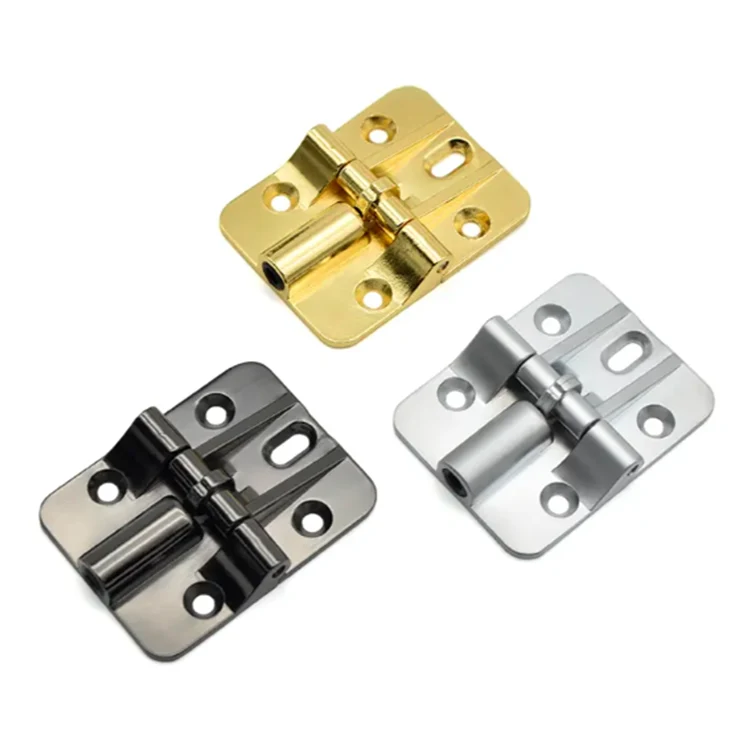
A Three-Dimensional Folding Adjustable Tension Hinge is a specialized hardware component that combines folding functionality, multi-directional alignment adjustment, and tension control. Unlike a basic hinge that primarily provides a pivot point, this design addresses several practical challenges associated with fitting, opening, closing, and maintaining movable panels.
Its three-dimensional adjustment capability allows installers to fine-tune panel positioning in three directions:
The folding mechanism supports applications in which a panel must move between open and closed positions, while the tension-control function helps regulate movement according to the hinge design. These features can simplify alignment work and improve the usability of furniture and cabinet systems.
For project-specific information, buyers can review the Ousiming Three-Dimensional Folding Adjustable Tension Hinge product page.
The hinge integrates several functional elements into one hardware assembly. The precise internal construction depends on the selected model, but its principal functions can be understood through three operating mechanisms.
After the hinge is mounted, the adjustment mechanism allows the installer to correct the position of the supported panel. This is particularly useful when installation tolerances, frame irregularities, or changes in panel position produce uneven gaps. Fine adjustment can reduce the need to remove and reinstall the entire door, provided the model supports adjustment after installation.
The folding structure allows connected panels to move through their intended operating path. Depending on the application, this can support compact furniture layouts, accessible storage spaces, and designs where conventional swinging movement is inconvenient.
Tension control influences the resistance or feel of movement. Properly selected and adjusted tension can help a panel move more consistently and reduce unwanted looseness. However, tension control should not automatically be interpreted as a soft-close function, a self-closing mechanism, or a load-locking feature. Those capabilities must be confirmed for the specific model.
For the best result, installers should follow the manufacturer's instructions and verify that the adjustment range, folding geometry, and tension characteristics match the intended application.
The value of a Three-Dimensional Folding Adjustable Tension Hinge comes from combining several functions that otherwise may require separate installation adjustments or additional hardware considerations.
Three-direction adjustment helps installers correct height, side clearance, and panel depth. Consistent gaps can improve both the visual finish and the practical operation of cabinet doors, furniture panels, and other compatible assemblies.
Folding movement can make it easier to design furniture and storage systems around limited space. It is particularly useful when the opening path must be coordinated with adjacent panels, shelves, or surrounding structures.
Adjustable tension can help achieve a more suitable operating feel. The appropriate setting depends on panel weight, dimensions, hinge geometry, and the intended frequency of use. Excessive tension can make movement difficult, while insufficient tension may fail to deliver the desired resistance.
Where the design permits post-installation adjustment, installers can fine-tune the panel without completely dismantling the assembly. This may reduce adjustment time during installation and maintenance.
Ousiming indicates that customization is available for its three-dimensional folding adjustable tension hinge. Buyers can discuss project requirements, material options, dimensions, and other relevant specifications with the manufacturer rather than assuming that one configuration suits every installation.
Material selection directly affects a hinge's strength, wear resistance, corrosion behavior, and suitability for its operating environment. Ousiming's product information identifies stainless steel or alloy materials as options for this hinge category. The exact material grade and configuration should be confirmed for the model being purchased.
When evaluating a supplier, consider the following quality factors:
For demanding projects, request technical drawings and applicable test documentation before finalizing the specification. Corrosion resistance and service life depend on the material grade, manufacturing quality, surface treatment, environment, and maintenance practices.
The combination of multi-directional adjustment and folding movement makes this hinge relevant to several furniture and interior hardware applications. Suitability depends on the model's load capacity, dimensions, mounting structure, and operating characteristics.
Cabinet doors must align with neighboring doors and surrounding frames to maintain consistent gaps. Three-dimensional adjustment can help correct positioning during installation or subsequent servicing. Folding configurations may also suit specialized storage layouts.
Furniture manufacturers can evaluate this hinge for selected movable panels, compact storage furniture, and customized furniture assemblies where space-efficient movement is important.
Interior projects often involve specific panel dimensions, finish requirements, and limited mounting space. A configurable hinge may help meet these requirements when its technical parameters are verified before production.
Some enclosures and access panels require controlled movement and precise positioning. A suitable hinge may support these functions, provided the application falls within the manufacturer's stated operating conditions and load limits.
Important: Do not assume that a furniture hinge is suitable for fire doors, emergency exits, heavy industrial doors, or other safety-critical installations without explicit manufacturer approval and the necessary compliance documentation.
The following comparison explains the general functional differences between common hinge types. Actual capabilities vary by model, and the comparison should not replace a review of product drawings and specifications.
| Evaluation Factor | Conventional Fixed Hinge | Three-Dimensional Folding Adjustable Tension Hinge |
|---|---|---|
| Alignment adjustment | Often limited after installation | Designed for adjustment in three directions |
| Folding function | Depends on the hinge design | Includes a folding mechanism |
| Tension control | May not be adjustable | Provides tension adjustment according to the model design |
| Installation correction | May require repositioning or remounting | Can simplify correction when post-installation adjustment is supported |
| Application flexibility | Suitable for straightforward pivoting requirements | Useful for compatible applications requiring folding and multi-directional alignment |
| Specification requirements | Basic dimensions and load capacity | Dimensions, load capacity, adjustment range, folding clearance, and tension behavior |
The adjustable folding option may offer greater flexibility, but it is not automatically the best choice for every project. A conventional hinge can remain appropriate where the movement is simple, alignment requirements are modest, and cost or mounting simplicity is the primary concern.
For purchasing teams, furniture manufacturers, and hardware distributors, choosing the correct hinge requires more than matching a product name. A structured evaluation helps avoid compatibility problems and unnecessary installation costs.
For bulk orders, it is also useful to clarify packaging, lead time, customization boundaries, inspection requirements, and the consistency of production specifications between batches.
Correct installation is essential to achieving the intended performance of an adjustable folding hinge. Even a well-manufactured component may operate poorly if the mounting surface is uneven, fasteners are incorrectly installed, or the panel exceeds the rated load.
Inspect the hinge periodically for loose fasteners, abnormal friction, visible wear, corrosion, and changes in movement. Clean exposed surfaces with a method appropriate for the material and finish. Lubricate only when recommended by the manufacturer, using a compatible lubricant.
If the panel begins to sag, move unevenly, or require excessive force, investigate the cause before increasing tension. Misalignment, overloading, worn components, and mounting problems may require different corrective actions.
It means the hinge is designed to allow positioning corrections in three directions: up and down, left and right, and forward and backward. The available adjustment range depends on the particular model.
No. Compatibility depends on door dimensions, weight, mounting geometry, available clearance, and the hinge's rated capacity. Buyers should confirm these factors before selecting a model.
Not necessarily. Tension adjustment regulates resistance or movement characteristics, whereas soft-close functionality generally uses a dedicated damping mechanism. Confirm the actual features of the selected product.
The product information identifies stainless steel or alloy materials. Buyers should confirm the exact grade, finish, and availability with Ousiming for their intended application.
Ousiming states that customization is available. Project buyers should provide drawings, panel dimensions, load requirements, finish preferences, and expected operating conditions so the manufacturer can assess feasibility.
Request the manufacturer's rated load, recommended hinge quantity, and applicable testing information for the exact configuration. Consider panel weight, dimensions, mounting strength, and operating frequency together.
Include the intended application, panel dimensions and weight, required adjustment directions, preferred material and finish, estimated order quantity, and any relevant drawings or samples. This information helps the supplier assess compatibility and provide a more useful quotation.
A Three-Dimensional Folding Adjustable Tension Hinge can offer practical advantages when a project requires accurate alignment, folding movement, and adjustable operating resistance. Its suitability ultimately depends on verified technical specifications, material selection, installation conditions, and the demands of the finished assembly. By evaluating these factors before purchasing, buyers can make more informed hardware decisions and reduce avoidable fitting and maintenance problems.
Ousiming offers customizable hinge solutions for customers seeking practical hardware for furniture, cabinets, and compatible panel applications. Whether you are developing a new product, sourcing components for volume production, or upgrading an existing design, share your drawings and performance requirements with the Ousiming team. Visit the Three-Dimensional Folding Adjustable Tension Hinge product page for more information, and contact us to discuss your application, request technical details, and explore a suitable hinge solution for your project.


