
When selecting reliable door hardware, Ousiming offers the Stainless Steel Damping Butt Hinge for applications that require controlled opening and closing, durable materials, and dependable movement. Combining stainless steel construction with an integrated damping mechanism, this hinge helps reduce abrupt movement and supports a smoother operating experience for doors, furniture, and equipment.
A stainless steel damping butt hinge combines the structural function of a traditional butt hinge with a damping mechanism designed to control door movement. Its stainless steel construction offers corrosion resistance and durability, while its controlled motion can help reduce slamming, noise, and unnecessary stress on connected components. This guide explains how damping hinges work, their advantages, suitable applications, selection criteria, and maintenance requirements. It also outlines practical considerations for buyers comparing hinge specifications and sourcing hardware for residential, commercial, and industrial projects.
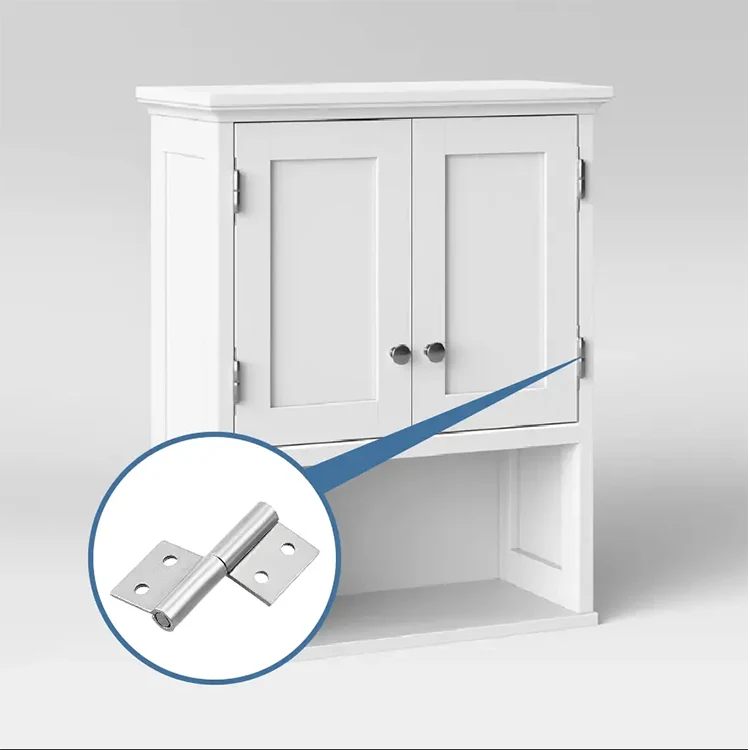
A butt hinge is a mechanical component that connects a door or panel to a frame and allows it to rotate around a fixed axis. It typically consists of two leaves joined by interlocking knuckles and a central pin. A damping butt hinge adds a mechanism that regulates movement, making opening or closing more controlled than with a conventional hinge alone.
The Stainless Steel Damping Butt Hinge from Ousiming is designed for applications where smooth movement, durability, and practical installation are important. According to the product information, its damping mechanism controls the opening and closing speed, while the stainless steel material supports resistance to corrosion and oxidation.
Unlike a basic hinge that primarily provides a pivot point, a damping model helps manage the motion of the connected door or panel. Depending on its specific design, it may be suitable for furniture, doors, windows, and mechanical or electrical equipment.
Buyers should confirm the hinge's dimensions, damping characteristics, mounting method, material grade, and load rating before specifying it for a particular project.
The primary purpose of damping is to manage movement rather than allow a door to swing freely until it reaches its stop. A built-in damper creates resistance during movement, helping reduce sudden acceleration and impact when the door approaches its closed or open position.
The exact operating principle depends on the hinge design. Some damping hinges use hydraulic resistance, while others use different mechanical arrangements. Buyers should refer to the manufacturer's technical information rather than assume that every damping butt hinge uses the same internal structure.
In practical use, a suitable damping hinge can provide several advantages:
One important distinction is that damping does not automatically mean self-closing, locking, or hold-open functionality. These features depend on the specific hinge design and should be confirmed before purchase.
Stainless steel is widely used in hardware because its corrosion resistance can help maintain performance and appearance over time. It is a practical material choice for many indoor environments, humid spaces, and applications where ordinary steel may require more protective finishing.
Actual corrosion performance depends on the stainless steel grade, surface finish, surrounding environment, cleaning chemicals, and contact with other materials. For coastal, chemical, or frequently washed environments, buyers should request confirmation that the selected grade is appropriate.
Uncontrolled door movement can make everyday operation uncomfortable and increase the likelihood of impact damage. Damping helps regulate motion, supporting a more controlled opening or closing experience.
This feature can be particularly useful in frequently accessed cabinets, furniture, and equipment panels where predictable movement contributes to ease of use.
Repeated slamming can place additional stress on fasteners, mounting surfaces, frames, and door components. By controlling movement, a suitable damping mechanism may help reduce these impact loads.
However, damping does not eliminate all wear. Correct sizing, installation, alignment, and maintenance remain necessary for dependable long-term performance.
Stainless steel damping butt hinges can be considered for various door and panel assemblies. Depending on the model's geometry and load rating, they may support furniture, doors, windows, and equipment enclosures.
For manufacturers and project purchasers, the ability to discuss customized requirements with a supplier can also help ensure that the selected hardware fits the intended installation.
The combination of controlled movement and stainless steel construction makes damping butt hinges worth considering across several application categories.
Not every hinge is suitable for every application. Heavy doors, fire-rated assemblies, security doors, and safety-critical equipment may require specialized hardware with independently verified performance ratings. Always check the relevant product documentation and applicable project requirements.
Choosing hardware based on appearance or price alone can lead to installation problems and premature wear. A more reliable approach is to assess the operating conditions, mechanical requirements, and compatibility of the hinge before placing an order.
Start by measuring the door's height, width, thickness, and total weight. Consider how the weight is distributed and whether the door is likely to experience frequent operation or additional forces.
Confirm the manufacturer's rated capacity for the exact model and mounting configuration. Do not assume that a hinge is suitable for a heavy door simply because it is made from stainless steel.
Determine whether the installation will be exposed to moisture, outdoor weather, salt, cleaning chemicals, or industrial contaminants. Ask the supplier to identify the stainless steel grade and recommend a suitable finish for the intended environment.
Check whether the damping strength or operating speed is adjustable. If adjustment is available, confirm the permitted adjustment range and the recommended procedure. The damping characteristics should match the door's size, weight, and intended operating behavior.
Verify the hinge's overall dimensions, hole spacing, leaf configuration, pin arrangement, and mounting requirements. Ensure the door and frame provide adequate support and that the selected fasteners are compatible with the materials being joined.
Before ordering in volume, request the product drawing, material information, installation instructions, and applicable load or durability test results. If a customized version is required, clarify which dimensions or functional characteristics can be modified.
Although both hinge types provide a pivoting connection, their operating characteristics and intended benefits can differ. The following table highlights the main considerations when choosing between them.
| Comparison Factor | Stainless Steel Damping Butt Hinge | Standard Butt Hinge |
|---|---|---|
| Primary function | Pivoting movement with damping control | Basic pivoting movement |
| Movement control | Designed to regulate movement through a damping mechanism | Generally depends on the user, gravity, or other door hardware |
| Closing impact | May reduce abrupt impact when correctly selected and installed | May allow forceful closing if no separate control mechanism is present |
| Material options | Stainless steel; confirm the grade for each model | Available in various metals and grades, depending on the product |
| Typical applications | Doors, furniture, panels, and compatible equipment assemblies | General doors, cabinets, lids, and other pivoting structures |
| Maintenance considerations | Requires inspection of the pivot, mounting hardware, and damping performance | Requires inspection of the pivot, alignment, and mounting hardware |
| Purchase considerations | Check damping characteristics, dimensions, load rating, and material grade | Check dimensions, load rating, material, and installation requirements |
The damping version may be preferable when controlled movement is a functional requirement. A standard butt hinge may be sufficient when simple pivoting is all that is needed. The final decision should reflect the application's actual performance requirements rather than the hinge category alone.
Even a well-designed hinge can perform poorly if the mounting surfaces are uneven or the hinge axis is misaligned. Careful installation helps the damping mechanism work as intended and reduces unnecessary stress on the hardware.
Periodic inspection can help identify problems before they affect normal operation. Maintenance frequency should reflect usage, environmental exposure, and the manufacturer's recommendations.
For applications requiring reliable repeated operation, establish an inspection schedule and record any changes in door movement, noise, or alignment.
It is a hinge that combines a pivoting connection with a damping mechanism designed to regulate door movement. Stainless steel construction can provide corrosion resistance and durability, depending on the grade and environment.
It is designed to help control movement and reduce abrupt closing. Actual results depend on the hinge design, damping performance, door weight, installation, and operating conditions. Confirm compatibility with the intended door before purchase.
They may be suitable for humid environments, but the appropriate stainless steel grade and finish must be selected for the exposure. Areas exposed to saltwater or aggressive chemicals may require more specialized material selection.
Some models offer adjustable damping, while others use a fixed damping configuration. Check the exact model specifications and follow the manufacturer's adjustment instructions rather than assuming all hinges have the same feature.
Consider door dimensions, weight, operating frequency, mounting space, hole spacing, and required movement. Verify the model's rated load and installation requirements with the supplier before finalizing the specification.
Ousiming's product page states that customization services are available. Buyers should provide their required dimensions, application details, material expectations, and damping requirements to confirm feasibility for a specific order.
Choose a compatible model, install it with correct alignment, avoid loads beyond its rating, inspect fasteners regularly, and follow the recommended cleaning and maintenance procedures. Investigate any change in damping performance promptly.
A stainless steel damping butt hinge can improve door operation by combining a durable hinge structure with controlled movement. When the material grade, damping characteristics, dimensions, and load capacity are matched to the application, it can help reduce abrupt impacts and support a smoother user experience.
For buyers evaluating hardware for furniture, doors, windows, or equipment panels, the most effective approach is to confirm technical compatibility before purchasing. Review the product details, installation requirements, and available customization options to ensure the selected hinge meets the project's needs.
Looking for a suitable hinge solution for your next project? Explore the Ousiming Stainless Steel Damping Butt Hinge and contact us to discuss your application, product specifications, bulk purchasing requirements, or customization needs. Our team can help you identify the relevant product details and determine the next steps toward a suitable hardware solution.


