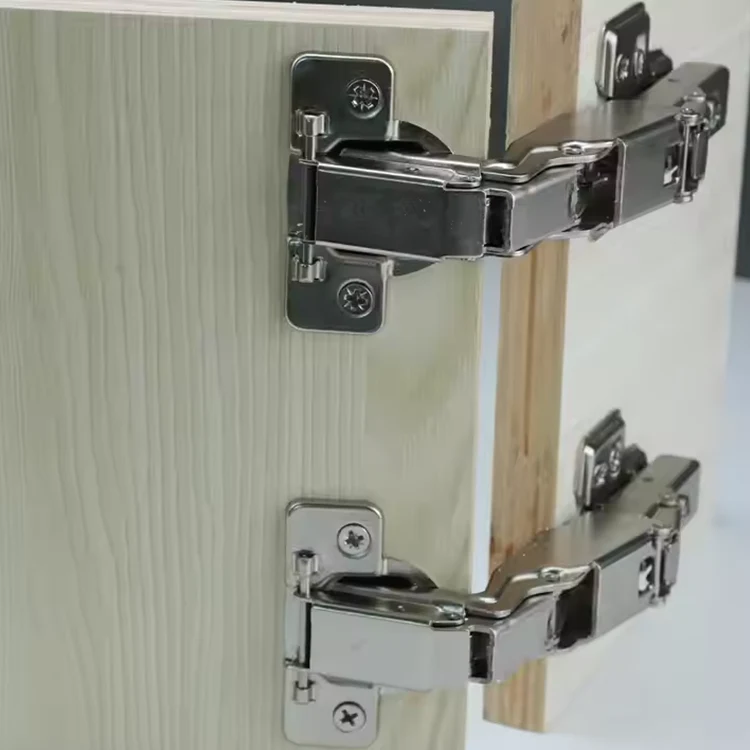
Cabinet hinges play an important role in furniture functionality, durability, and everyday user experience. A stainless steel damping hydraulic buffer large bend hinge combines a concealed hinge structure, a hydraulic soft-closing mechanism, and a large-bend arm design to provide controlled cabinet door movement and a suitable installation position for specific furniture configurations.
For cabinet manufacturers, furniture hardware distributors, and wholesale buyers, understanding the hinge structure is essential when selecting components for different cabinet layouts. This guide explores how hydraulic damping works, what makes a large bend hinge different, how stainless steel contributes to product performance, and what buyers should consider regarding installation, adjustment, maintenance, and bulk purchasing.
A stainless steel damping hydraulic buffer large bend hinge is a cabinet hardware component designed to connect a cabinet door to its frame while providing controlled opening and closing movement. It integrates a hinge arm, mounting structure, and hydraulic damping mechanism into one functional assembly.
The product name describes three important characteristics:
Unlike an ordinary hinge that simply allows a door to rotate, a hydraulic buffer hinge is designed to improve the closing experience. As the door approaches its closed position, the damping mechanism controls its movement, helping prevent sudden slamming.
This makes the product particularly relevant for furniture projects that require a concealed hinge appearance, controlled closing, and a specific relationship between the cabinet door and side panel.
The hydraulic damping mechanism is the key feature that distinguishes a soft-closing hinge from a conventional cabinet hinge. It uses fluid resistance inside a compact damping assembly to control the movement of the door.
When the user pushes the cabinet door toward its closed position, the hinge arm moves through its operating range. The spring mechanism helps guide the movement according to the hinge design.
As the door approaches the closing position, the hydraulic buffer begins controlling the movement. Internal components create resistance as hydraulic fluid passes through restricted passages inside the damping chamber.
The resistance slows the door instead of allowing it to move freely into the cabinet frame. This helps reduce the impact between the door and cabinet body.
The door completes its movement in a more controlled manner. Depending on the hinge design and installation conditions, this can reduce closing noise and improve the overall user experience.
| Comparison | Ordinary Hinge | Hydraulic Buffer Hinge |
|---|---|---|
| Closing Movement | Generally less controlled | Hydraulically controlled near closing |
| Impact | May create stronger door-to-frame impact | Helps reduce closing impact |
| Operating Noise | Depends on the door and installation | Designed for quieter closing |
| User Experience | Basic opening and closing function | Smoother, more controlled closing |
| Internal Structure | Conventional hinge mechanism | Includes a damping mechanism |
Cabinet door geometry is one of the most important factors when selecting concealed hinges. Different hinge arm shapes determine how the door sits in relation to the cabinet side panel.
Large bend hinges are commonly used for inset-style cabinet doors, where the door is designed to fit within the cabinet opening rather than cover the side panel completely.
| Hinge Type | Common Configuration | Typical Door Position |
|---|---|---|
| Straight Arm Hinge | Full overlay | Door covers most or all of the cabinet side edge. |
| Medium Bend Hinge | Half overlay | Two adjacent doors can share a cabinet partition. |
| Large Bend Hinge | No overlay / inset | Door sits within the cabinet opening. |
These are general classifications. Actual overlay dimensions depend on the hinge arm geometry, mounting plate height, cup position, door thickness, and cabinet construction.
In inset cabinet designs, the door must align carefully with the cabinet opening. A suitable large bend hinge helps position the door correctly while allowing it to rotate during opening and closing.
This configuration is commonly considered for:
For furniture manufacturers, selecting the correct bend type early in the design process helps reduce installation adjustments and alignment problems during mass production.
A stainless steel damping hydraulic buffer large bend hinge offers several practical advantages when its material, structure, and specifications are appropriate for the intended cabinet application.
The integrated hydraulic buffer helps slow the door during the final closing movement, reducing sudden impact.
Suitable stainless steel components can provide useful corrosion resistance and structural durability in furniture hardware applications.
The large bend arm geometry supports cabinet configurations that require a no-overlay or inset door position.
Controlled closing movement helps reduce the noise associated with doors striking cabinet frames.
The hydraulic damping function works automatically during normal door movement without requiring separate operation.
Different bend configurations allow manufacturers to match hinge geometry with different cabinet layouts.
These characteristics can help furniture manufacturers improve the perceived quality of their finished products. However, actual performance depends on hinge specifications, cabinet door weight, installation accuracy, and usage conditions.
Knowing the structure of a hydraulic buffer hinge helps purchasing teams evaluate product quality and identify which specifications need to be confirmed before ordering.
| Component | Function | Important Consideration |
|---|---|---|
| Hinge Cup | Connects the hinge to the cabinet door through a prepared cup hole. | Cup diameter, depth, and drilling position. |
| Hinge Arm | Controls the relationship between the door and cabinet frame. | Bend geometry and structural strength. |
| Hydraulic Damper | Controls closing movement through fluid resistance. | Damping consistency and compatibility with door conditions. |
| Spring Assembly | Provides closing assistance according to the hinge design. | Spring strength and operating stability. |
| Mounting Plate | Connects the hinge to the cabinet side panel. | Mounting dimensions and adjustment compatibility. |
| Adjustment Screws | Allow correction of door position. | Adjustment range and screw accessibility. |
| Connecting Rivets | Join moving hinge components. | Assembly strength and movement consistency. |
Not every hinge model uses an identical internal structure. Buyers should request product drawings or technical information to confirm the construction and component specifications of the exact model they intend to purchase.
The large bend hydraulic buffer hinge is particularly relevant to furniture projects that require inset cabinet doors and controlled closing movement.
Kitchen cabinets are opened and closed frequently throughout the day. Soft-closing hinges help reduce door impact and improve everyday convenience. Large bend versions can be considered for inset kitchen cabinet designs.
Wardrobes often contain multiple cabinet doors with different dimensions and layouts. A suitable hydraulic hinge can provide a more controlled closing experience while supporting the intended door position.
Bathroom furniture is frequently exposed to humidity. Suitable stainless steel hinge construction can be beneficial, but buyers should verify the actual stainless steel grade, surface condition, and corrosion resistance before selecting products for humid environments.
Office cabinets, document storage units, and built-in furniture can benefit from concealed hinges with controlled closing movement. Inset designs are also useful where a consistent front appearance is required.
Custom furniture projects often involve specific cabinet dimensions and door positioning. Selecting the appropriate hinge bend type helps furniture manufacturers achieve the intended appearance and functional clearance.
Choosing a suitable hinge requires more than matching the product name. Furniture manufacturers should consider door dimensions, weight, cabinet construction, material requirements, and installation geometry.
Determine whether the cabinet door is designed for full overlay, half overlay, or inset installation. A large bend hinge is generally associated with inset or no-overlay applications, but the exact model must be checked against the cabinet drawing.
Door weight and size affect the load placed on the hinge. A large or heavy door may require multiple hinges or a different hinge specification. The appropriate quantity should be determined using the manufacturer's load guidance and the actual cabinet design.
Stainless steel is a broad material category. Buyers should confirm the actual grade and which components are made from stainless steel. For humid or potentially corrosive environments, material verification is particularly important.
The damping mechanism should provide consistent closing movement under the intended door conditions. Ask about operating temperature, adjustment options, and suitability for the specified door weight and dimensions.
Check the cup diameter, cup depth, drilling distance, hinge arm geometry, mounting plate dimensions, and required installation clearance.
| Selection Factor | Information to Confirm | Purchasing Purpose |
|---|---|---|
| Door Configuration | Inset, full overlay, or half overlay | Ensures correct hinge geometry. |
| Door Weight | Actual door weight and dimensions | Determines suitable load support. |
| Material | Stainless steel grade and component details | Checks durability and corrosion suitability. |
| Hydraulic Function | Damping behavior and adjustment options | Ensures appropriate closing performance. |
| Installation | Cup size, drilling distance, and mounting plate | Reduces fitting and alignment issues. |
| Order Requirements | Quantity, packaging, and delivery schedule | Supports purchasing and inventory planning. |
Even a well-designed hinge may not perform properly if it is installed incorrectly. Accurate drilling, correct mounting positions, and careful adjustment are essential for smooth cabinet door operation.
Measure the door dimensions and mark the hinge cup positions according to the manufacturer's installation drawing. Use the specified drilling diameter and depth to avoid damaging the door panel.
Position the hinge cup in the prepared hole and secure it using the appropriate fixing method. Ensure that the hinge sits flush and that the fastening points are stable.
Install the mounting plate on the cabinet side panel at the specified position. Check that the plate is correctly aligned with the hinge arm.
Attach the hinge arm to the mounting plate according to the hinge design. Verify that the connection is secure and that the door can move through its intended opening range.
Use the available adjustment screws to correct horizontal, vertical, and depth positioning where supported by the model. Maintain consistent gaps around the cabinet door.
Open and close the door several times. Check for smooth movement, proper alignment, abnormal noise, and consistent damping behavior.
Some hinge problems are caused by installation errors, while others may result from unsuitable product selection or component wear. Identifying the cause before replacing the hinge can save time and maintenance costs.
| Problem | Possible Cause | Recommended Solution |
|---|---|---|
| Door Does Not Close Completely | Incorrect alignment, obstruction, or unsuitable damping behavior. | Check door clearance, mounting position, and hinge compatibility. |
| Door Closes Too Quickly | Damper malfunction, incorrect adjustment, or incompatible door load. | Check the hydraulic mechanism and confirm model suitability. |
| Abnormal Closing Noise | Loose fixing screws, component friction, or door-to-frame contact. | Inspect mounting points and correct door alignment. |
| Uneven Door Gaps | Incorrect hinge position or inconsistent mounting plate height. | Adjust hinge positions and verify installation dimensions. |
| Hinge Feels Loose | Loose fasteners, damaged mounting holes, or worn connections. | Inspect the fixing points and replace damaged components. |
| Corrosion Appears | Unsuitable material grade or aggressive environmental exposure. | Confirm material specifications and environmental compatibility. |
If the hydraulic mechanism shows signs of fluid leakage or persistent damping failure, the hinge should be inspected and replaced when necessary. Do not attempt to open or refill a sealed hydraulic damper unless the manufacturer specifically provides an approved service procedure.
Regular maintenance helps preserve hinge movement and reduces the likelihood of premature component failure. Although cabinet hinges generally require limited maintenance, several simple practices can improve their service life.
For furniture installed in kitchens and bathrooms, regular cleaning is particularly useful because grease, moisture, and cleaning chemical residues may accumulate around the hinge area.
Proper installation is equally important. Excessive door loads, unsuitable screw selection, and incorrect drilling can shorten service life even when the hinge itself is manufactured to a suitable standard.
For furniture hardware wholesalers, importers, distributors, and cabinet manufacturers, purchasing hinges in bulk involves more than comparing unit prices. Product consistency, technical compatibility, packaging, and supplier communication all affect the success of an order.
Request detailed product information, including material grade, hinge dimensions, bend type, cup specifications, hydraulic function, and applicable installation requirements. This helps prevent confusion between straight arm, medium bend, and large bend models.
For large orders, consistency between production batches is important. Buyers should pay attention to dimensional accuracy, surface finish, assembly quality, hinge movement, and damping performance.
Different furniture brands may have specific requirements for hinge dimensions, surface treatment, packaging, labeling, and product presentation. Confirm which customization services are available before placing an order.
Appropriate packaging helps protect hinge surfaces and moving components during storage and transportation. Bulk buyers should confirm the quantity per package, carton specifications, labeling, and export packaging requirements.
A supplier with relevant manufacturing experience can help buyers clarify product differences and identify suitable hardware configurations. Zhongshan Ousiming Hardware Co., Ltd. focuses on hardware products, including door and window accessories and hinge products, and offers a range of hardware manufacturing and processing capabilities.
When evaluating a supplier, buyers should request product drawings, samples, material details, and applicable quality information to ensure that the selected hinge meets their project requirements.
It is a concealed cabinet hinge that combines a large-bend arm configuration with a hydraulic damping mechanism. It is generally used for inset or no-overlay cabinet doors that require controlled soft closing.
Large bend refers to the curved geometry of the hinge arm. It is commonly associated with no-overlay or inset cabinet door installation, where the door fits within the cabinet opening rather than covering the cabinet side panel.
The built-in hydraulic damper creates fluid resistance as the door approaches its closed position. This resistance slows the movement and helps reduce the impact between the door and cabinet frame.
Suitable stainless steel grades offer corrosion resistance, strength, and durability for various furniture hardware applications. Actual performance depends on the stainless steel grade, component design, surface condition, and environment.
No. It is generally intended for inset or no-overlay configurations. The door thickness, dimensions, cabinet structure, cup drilling position, and mounting plate must be checked before selection.
A medium bend hinge is commonly used for half-overlay applications, while a large bend hinge is generally used for no-overlay or inset applications. Their arm geometries position cabinet doors differently relative to the cabinet side panel.
Adjustment capability depends on the specific hinge model. Some designs provide damping adjustment, while others have a fixed damping configuration. Buyers should confirm this feature with the manufacturer.
The required number depends on door height, width, weight, material, and hinge load capacity. Follow the manufacturer's installation recommendations and evaluate the actual cabinet door construction before determining the quantity.
Possible causes include hydraulic damper wear, internal damage, unsuitable door conditions, or installation problems. Check the hinge alignment and specifications first. Replace the hinge if the damping mechanism is damaged.
Provide the required hinge type, material specification, cabinet door dimensions, approximate door weight, installation configuration, required quantity, and packaging preferences. Drawings or product samples can also help confirm compatibility.
A stainless steel damping hydraulic buffer large bend hinge is a practical hardware solution for furniture projects that require inset cabinet door installation and controlled soft-closing performance. Its large bend arm helps achieve the intended door positioning, while the hydraulic buffer reduces sudden closing impact and improves everyday operation.
However, the right hinge must match the actual cabinet design. Material grade, door weight, installation dimensions, mounting plate compatibility, and damping performance should all be considered before purchasing.
For furniture manufacturers, cabinet brands, wholesalers, and hardware distributors, working with an experienced supplier can make product selection and bulk purchasing more efficient. Careful specification checking and sample testing also help reduce installation problems and maintain consistent product quality.
Zhongshan Ousiming Hardware Co., Ltd. provides hardware product solutions for customers in the furniture and door and window hardware industries.
Whether you are sourcing stainless steel hydraulic buffer hinges, large bend cabinet hinges, or other furniture hardware accessories, selecting the right product configuration is essential for your business.
Contact us today to discuss your product specifications, bulk purchasing requirements, and customization needs. Let our team help you find a suitable hardware solution for your furniture projects.
Contact Us