Article Summary: Choosing the right hinge is essential for ensuring smooth movement, structural stability, and long-term performance in doors, windows, furniture, and industrial equipment. A Stainless Steel Thickened Hinge Double-Acting Hinge from Ousiming combines corrosion-resistant stainless steel, a reinforced thickened structure, and convenient two-way opening functionality. This article explores its working principles, key advantages, material characteristics, applications, installation considerations, and maintenance requirements to help manufacturers, distributors, and project buyers make informed purchasing decisions.
1. What Is a Stainless Steel Thickened Hinge Double-Acting Hinge?
2. How Does a Double-Acting Hinge Work?
3. What Are Its Main Features and Advantages?
4. Why Is Stainless Steel Important for Hinge Performance?
5. Where Can These Hinges Be Used?
6. How Does It Compare with Conventional Hinges?
7. How to Select the Right Double-Acting Hinge?
8. Installation and Maintenance Recommendations
9. Manufacturing Quality and Engineering Assurance
10. Frequently Asked Questions
11. Conclusion: Is This Hinge the Right Investment?
A hinge is more than a simple connecting component. It directly influences the opening flexibility, structural stability, and service life of a door or mechanical assembly. In applications where doors need to open in both directions while maintaining dependable support, a double-acting hinge can offer significant functional advantages.
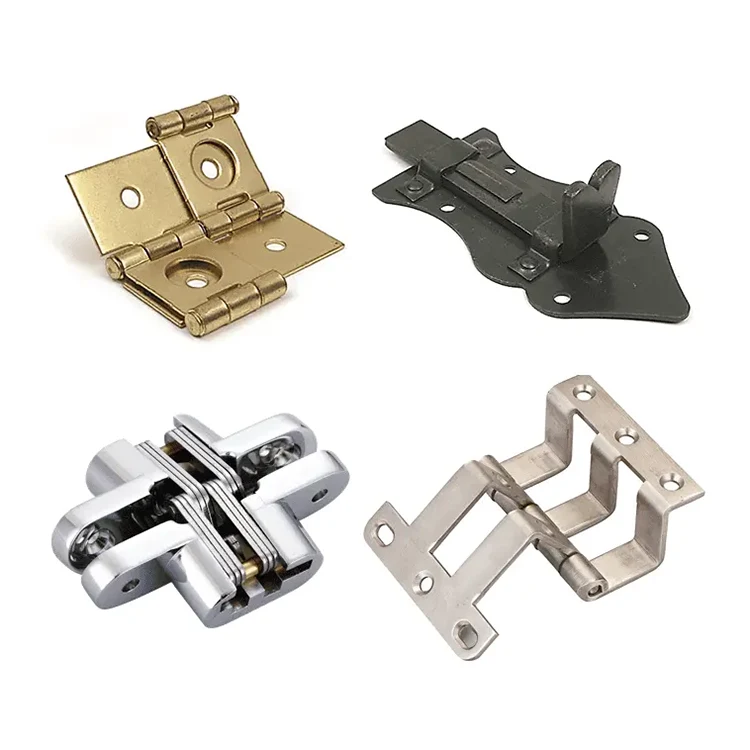
A Stainless Steel Thickened Hinge Double-Acting Hinge is a specialized hardware component designed to provide two-way rotational movement. Unlike conventional hinges that generally allow a door to swing in one direction, its double-acting mechanism enables movement in both directions, offering greater operational flexibility.
Ousiming manufactures this hinge using stainless steel and a thickened structural design. The combination is intended to improve mechanical strength, load-bearing capability, corrosion resistance, and overall durability.
Its main characteristics include:
For buyers seeking a combination of functional flexibility and durable hardware construction, this hinge offers a practical solution worth considering.
The defining characteristic of a double-acting hinge is its ability to support movement in two opposing directions. This function makes it different from standard one-directional hinges commonly installed on residential doors and cabinets.
When properly installed, the hinge connects a movable panel to a fixed frame and provides a rotational connection. Its mechanism allows the connected door or panel to swing inward or outward, depending on the installation configuration and the hinge's mechanical design.
The basic operating process involves several mechanical elements:
This operating principle is especially useful in environments where people frequently pass through doors from different directions. It can also provide greater flexibility in equipment assemblies where movement space and access requirements are important.
It is worth noting that double-acting movement does not automatically mean that every model has a self-closing function. Buyers should confirm whether a particular hinge includes a spring-return mechanism or requires a separate closing component.
The performance of a hinge depends on several factors, including material quality, structural thickness, mechanical design, manufacturing precision, and installation conditions. Ousiming's stainless steel thickened double-acting hinge focuses on several practical advantages.
The thickened design is an important characteristic of this product. Compared with lightweight hardware constructions, a properly engineered reinforced structure can provide greater resistance to deformation and improve the hinge's ability to support mechanical loads.
This is particularly important for doors and assemblies that experience frequent opening and closing cycles. However, actual load capacity depends on dimensions, material grade, mounting configuration, fasteners, and installation quality. Buyers should verify the applicable load specifications before selecting a model.
Stainless steel is widely used in hardware manufacturing because of its protective chromium-rich passive surface layer. This characteristic helps reduce corrosion under suitable operating conditions.
For applications exposed to moisture, temperature changes, or certain corrosive environments, stainless steel can offer advantages over ordinary carbon steel hardware. Proper material selection and maintenance remain essential, especially in environments containing chlorides or aggressive chemicals.
The bidirectional movement capability makes this hinge suitable for installations where users need access from both sides. It can help improve circulation efficiency and reduce the inconvenience associated with one-directional door operation.
Hardware is also part of a product's overall visual presentation. The smooth and refined stainless steel surface helps create a clean appearance that can complement modern architectural and industrial designs.
Beyond conventional door installations, double-acting hinge designs can be considered for compatible furniture assemblies, automotive applications, and robotic equipment. The final suitability depends on the movement requirements and mechanical specifications of the individual project.
Material selection plays a significant role in determining a hinge's durability, maintenance requirements, and suitability for different working environments.
Stainless steel is a popular choice for professional hardware manufacturing because it combines mechanical strength with corrosion resistance. These properties make it suitable for many indoor and selected demanding applications.
Different stainless steel grades offer different levels of corrosion resistance and mechanical performance. Therefore, procurement teams should confirm the exact material grade rather than assuming that all stainless steel hinges have identical characteristics.
For projects involving coastal environments, chemical exposure, or frequent cleaning, material compatibility should receive particular attention.
The combination of reinforced construction and two-way movement gives the stainless steel thickened double-acting hinge a range of potential applications. Its suitability depends on the door weight, movement frequency, environmental conditions, and mounting requirements.
Commercial buildings often require convenient access between interconnected spaces. Double-acting hinges can be useful for compatible doors in service areas, interior passageways, and other locations where two-way movement is desirable.
Selected window and hardware assemblies may benefit from reinforced hinge connections. However, the movement direction, frame structure, and opening geometry must be compatible with the hinge design.
Furniture manufacturers may use specialized stainless steel hinges in custom movable structures, cabinets, and other furniture assemblies where strength and flexible movement are required.
In automotive-related applications, hinges may be incorporated into selected access panels, equipment compartments, and movable structures. Vibration resistance, mounting strength, and application-specific testing should be considered before implementation.
Robotic systems and industrial equipment sometimes require movable covers, protective panels, and access doors. A suitable hinge can provide the necessary rotational connection while supporting repeated operation.
When selecting hardware for these applications, engineers should evaluate the complete mechanical assembly rather than considering the hinge as an isolated component.
Understanding the differences between double-acting hinges and conventional hinges helps buyers identify the most appropriate solution for their projects.
The following table provides a general functional comparison. Actual performance varies according to product construction and manufacturer specifications.
| Comparison Factor | Stainless Steel Thickened Double-Acting Hinge | Conventional Single-Acting Hinge |
|---|---|---|
| Opening Direction | Supports two-way movement | Generally supports one-way movement |
| Material | Stainless steel construction | May use steel, stainless steel, brass, or other materials |
| Structural Design | Thickened construction for improved strength | Varies according to product type and application |
| Corrosion Resistance | Benefits from stainless steel's corrosion-resistant properties | Depends on the selected material and surface treatment |
| Movement Flexibility | Suitable for applications requiring two-way opening | Suitable for conventional directional opening |
| Typical Applications | Compatible commercial doors, furniture, and equipment | Residential doors, cabinets, and general hardware |
| Installation Requirements | Requires compatible mounting geometry and clearance | Generally follows conventional hinge installation practices |
The main advantage of a double-acting design is movement flexibility. Its thickened construction and stainless steel material also make it attractive for buyers prioritizing structural durability and corrosion resistance.
Nevertheless, a conventional hinge may remain the better option when a door must open in only one direction or when the existing frame is designed for standard hinge configurations.
Choosing a suitable hinge requires more than comparing prices. Professional buyers should evaluate mechanical compatibility, material requirements, installation conditions, and expected service life.
Before placing a bulk order, procurement teams should consider asking the following questions:
Clear technical communication helps reduce purchasing risks and improves compatibility between the hinge and the final assembly.
Even a well-manufactured hinge may experience premature wear if it is installed incorrectly or operated under unsuitable conditions. Proper installation and routine maintenance are therefore essential for maintaining reliable performance.
Regular inspection and cleaning can help preserve hinge performance and reduce unnecessary maintenance costs.
For more information about related hardware maintenance practices, buyers can also explore Ousiming's door and window hardware product range and consult the manufacturer for application-specific recommendations.
For distributors, construction companies, furniture manufacturers, and industrial equipment producers, product quality consistency is an important factor when choosing a hardware supplier.
A reliable hinge manufacturing process should focus on material selection, dimensional consistency, structural integrity, surface quality, and functional inspection.
| Quality Control Area | Inspection Focus | Purchasing Benefit |
|---|---|---|
| Raw Material Selection | Stainless steel material verification | Supports material consistency and application suitability |
| Structural Processing | Thickness, dimensions, and structural integrity | Helps ensure reliable mechanical construction |
| Surface Inspection | Appearance, smoothness, and visible defects | Improves product presentation and consistency |
| Functional Inspection | Rotational movement and assembly compatibility | Helps identify operating problems before delivery |
| Final Quality Checks | Product appearance and order conformity | Reduces the risk of receiving nonconforming products |
As a professional hardware manufacturer, Ousiming emphasizes quality control throughout the production process and offers customized services to meet different customer requirements.
For international buyers, working directly with a manufacturer can also make technical communication, product customization, quotation evaluation, and order coordination more efficient.
When evaluating a supplier, it is advisable to request relevant product drawings, material information, inspection details, and samples whenever necessary. These documents help establish a clearer understanding of product suitability before mass production or large-volume purchasing.
A stainless steel thickened hinge double-acting hinge is designed for compatible doors and movable structures that require two-way opening. Its stainless steel construction provides corrosion resistance, while its reinforced design helps improve structural strength. Potential applications include selected commercial doors, furniture assemblies, automotive components, and industrial equipment.
The primary difference is its structural design. A thickened hinge features a reinforced construction intended to improve strength and resistance to deformation. However, actual load-bearing performance depends on material grade, dimensions, mounting conditions, and manufacturing quality.
Yes. A double-acting hinge is designed to support rotational movement in two opposing directions. This makes it suitable for applications where doors need to open inward and outward. Buyers should confirm the specific movement range and installation requirements of the selected model.
Stainless steel generally offers better corrosion resistance than ordinary untreated carbon steel. It can be suitable for many humid environments, although performance depends on the stainless steel grade, exposure conditions, and maintenance practices. Highly corrosive environments may require a more specialized material selection.
Not necessarily. Two-way opening and automatic closing are different functions. Some double-acting hinges may incorporate spring-return mechanisms, while others provide bidirectional movement without automatic closing. Always verify the product specifications before purchasing if automatic return is required.
The appropriate thickness depends on the door weight, dimensions, operating frequency, mounting structure, and expected mechanical loads. It is recommended to provide these details to the manufacturer so that the hinge configuration can be evaluated against the actual application requirements.
Ousiming provides customized services to accommodate different customer requirements. Buyers can discuss their application, dimensional preferences, installation conditions, and purchasing quantities with the manufacturer to determine the available customization options.
Regularly clean the hinge surface, inspect mounting fasteners, check rotational movement, and apply suitable lubricant when recommended. Avoid using aggressive cleaning chemicals that may damage the stainless steel surface or affect its protective properties.
A Stainless Steel Thickened Hinge Double-Acting Hinge is a practical hardware solution for applications requiring reinforced construction, corrosion resistance, and flexible two-way movement. Its stainless steel material, thickened structure, and versatile application potential make it a valuable option for compatible commercial, architectural, furniture, and industrial assemblies.
However, selecting the right hinge still requires careful consideration of door weight, mounting dimensions, material grade, opening requirements, and operating environment. Working with an experienced manufacturer can help buyers identify suitable configurations and reduce compatibility risks.
Ousiming is committed to providing quality hardware products, professional manufacturing support, and customized services for customers with different application requirements. Whether you are a hardware distributor, construction contractor, furniture manufacturer, or industrial equipment buyer, choosing the right hinge supplier is an important step toward achieving dependable product performance.
If you are looking for a reliable Stainless Steel Thickened Hinge Double-Acting Hinge for your next project, explore Ousiming's product solutions and discuss your technical requirements with our team. For product details, customized specifications, bulk purchasing inquiries, and competitive factory quotations, contact us today. Ousiming is ready to help you find suitable hardware solutions for your business.


